

BLYTHEWOOD – The heroes of the American Revolutionary War whose names fill history books are familiar – Francis Marion, Thomas Sumter, Daniel Morgan and others.
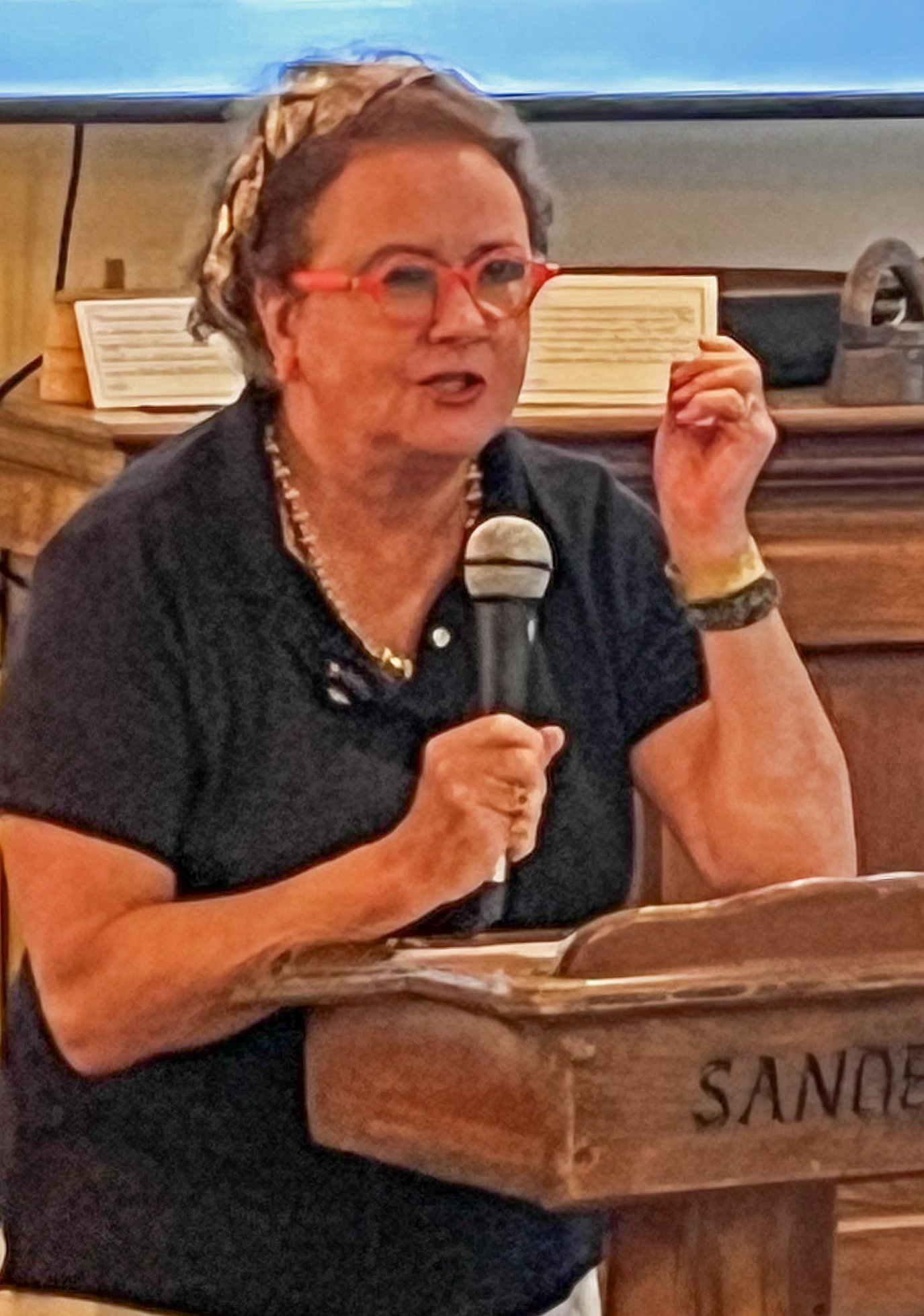
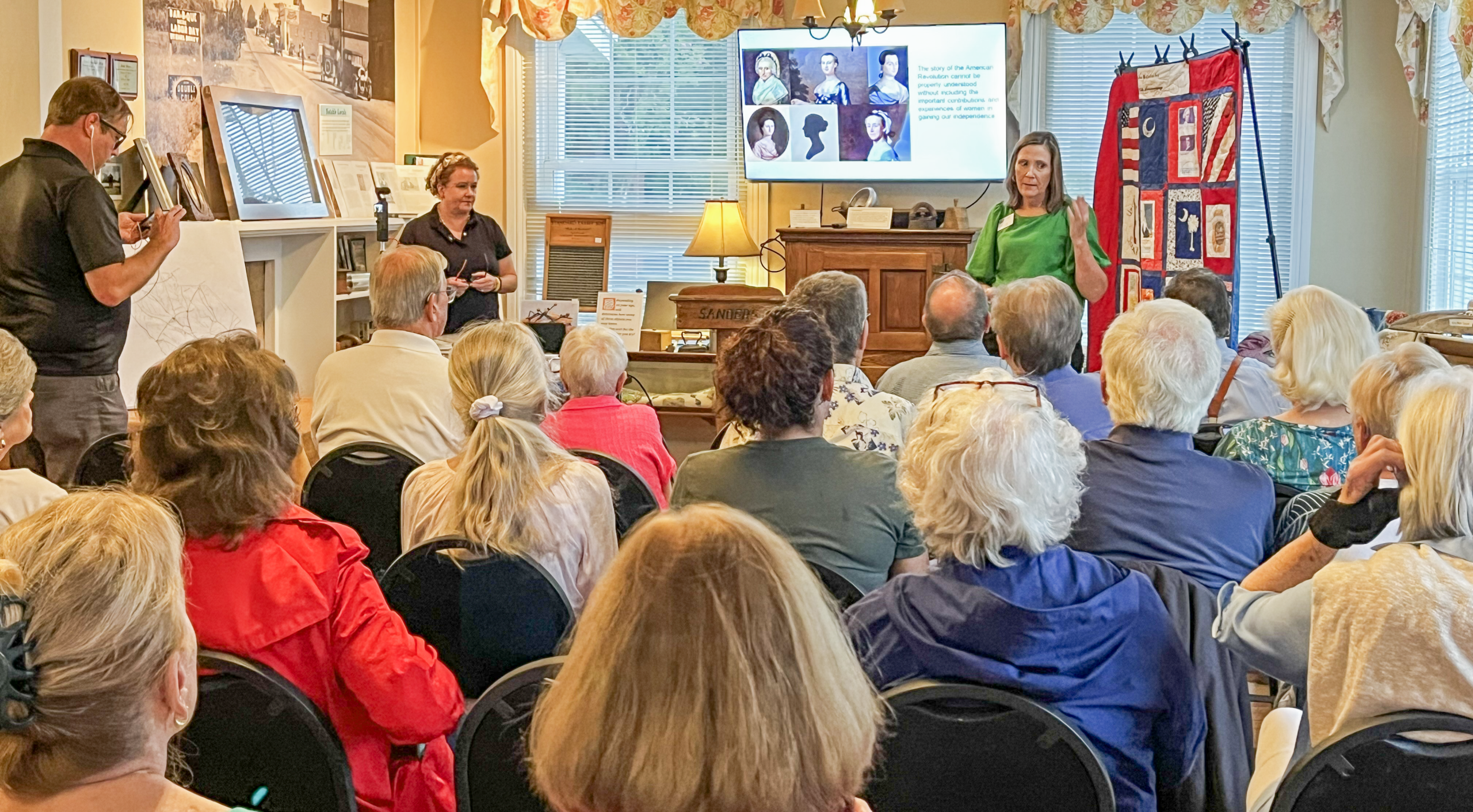
But playwright and historian Millie West recently talked about another group of Patriots in the Revolution whose stories have received far less attention: the women who carried intelligence through enemy territory, defended their homes against armed Loyalists, tended wounded soldiers and, in some cases, took up weapons themselves.
West talked about several of these ordinary-turned-heroic women in the first of a five-part lecture series about the American Revolution. That series is being presented by the Blythewood Historical Society and the Nord Family Foundation every Thursday evening during August at the Langford-Nord House.
“Having grown up in South Carolina, I learned about our Revolutionary War male heroes,” West told the audience. “But our history books contained little, if any, information about our brave women patriots.”
West’s research into the women heroes of the American Revolution began three years ago after she was asked to serve on the Newberry County Revolutionary War 250th Committee to research women patriots.
The first woman Patriot she highlighted in Thursday night’s presentation was Mary Ramage Dillard, whose warning of an approaching British force helped Patriot Gen. Thomas Sumter prepare for the Battle of Blackstock’s Plantation in November 1780.
Dillard’s husband, James, was a captain in the Little River Militia Regiment, and she sometimes accompanied him on military campaigns.
On one occasion when he was away, British and Tory soldiers stopped at the Dillard home and ordered her to prepare them a meal. While serving them, Mary Dillard overheard the men discussing plans to attack Sumter’s forces at Blackstock.
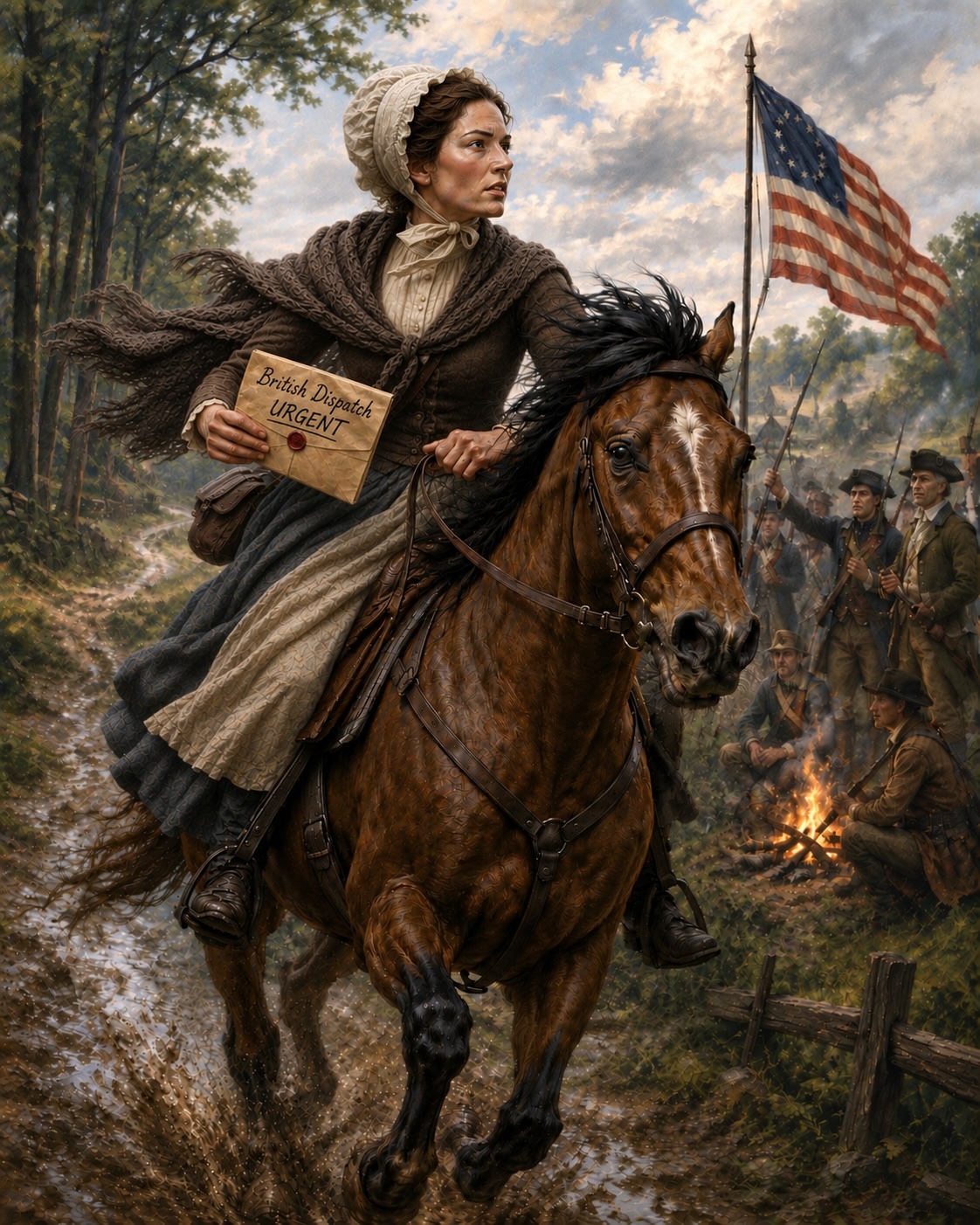
After they left, Dillard secured her sleeping infant at home, mounted a horse without taking time to saddle it and rode to warn Sumter.
Her information gave the Patriots time to prepare for the approaching force, which was led by British Lt. Col. Banastre Tarleton. The battle resulted in Tarleton’s first defeat in the South Carolina backcountry.
A South Carolina teenager, Laodicea “Dicey” Langston, served as an intelligence source for her Patriot brother.
About 15 years old in 1781, Langston learned that Loyalist “Bloody Bill” Cunningham and his men planned to ambush Patriots in the area where her brother James was located.
After nightfall, she set out on foot, traveling miles and crossing the Enoree River to deliver the warning. Finding the Patriot soldiers exhausted and hungry, Langston made cornbread, broke it into pieces and stuffed it into their shot pouches before they hurried away to warn others.
She returned home before sunrise.
When Cunningham’s men arrived, their intended victims were gone.
West also told the story of Grace and Rachel Martin, daughters-in-law of Elizabeth Martin, matriarch of a family known as the “Fighting Martins.”
After learning that a British courier accompanied by two soldiers would be carrying important military dispatches through the area, Grace and Rachel dressed in their husbands’ clothing, armed themselves and waited along the route.
When the three men approached, the women confronted them, forced them to surrender and seized their documents.
They then released the men and returned home.
A third daughter-in-law, Sally Martin, riding alone on an old blind pony, carried the captured dispatches to Patriot General Nathanael Greene at Ninety Six, arriving around midnight.
The story took another turn when the British soldiers later stopped at the Martin home seeking hospitality. They told their hostesses they had been captured by two young rebel men – never realizing those “men” were the women serving them.
Some women fought much more openly.
Margaret Corbin was bringing water to artillerymen during the British attack on Fort Washington in 1776 when cannon fire killed her husband, John, who was serving on a gun crew.
Corbin immediately took his place at the cannon and continued fighting until she was struck three times by British fire, suffering serious wounds to her arm, chest and jaw.
She survived and later became the first woman to receive a military pension from Congress.
In Georgia, Nancy Morgan Hart’s confrontation with a group of Tory soldiers became legend.
According to the account West related, five or six Tories arrived at Hart’s home demanding food. While they ate and drank, Hart silently began slipping their guns outside through an opening in the cabin wall.
She eventually seized one of the remaining weapons and ordered the soldiers not to move. When one ignored her, she shot him. When another moved toward the weapons, she shot him as well.
She held the others until her husband and neighbors arrived.
One of West’s most dramatic South Carolina stories was that of Rebecca Motte, whose plantation home near the Congaree and Wateree rivers had been seized and fortified by British troops.
When Patriot forces under Francis Marion and “Light Horse Harry” Lee concluded that the house would have to be set afire to force a British surrender, Motte did not protest the destruction of her property.
Instead, she reportedly provided her own bow to help them do it.
A flaming arrow was fired onto the roof, and the British surrendered. The fire was extinguished and the house saved.
Martha Bratton showed a different kind of courage when British and Tory troops descended on her family’s property while her husband, Patriot Col. William Bratton, was away.
After refusing to reveal her husband’s whereabouts, she was threatened by a Tory with a reaping hook. Another Loyalist soldier intervened and saved her.
Later, after Patriot forces defeated the British and captured that same soldier, he faced execution.
Bratton recognized him as the man who had saved her life and intervened on his behalf. His death sentence was rescinded.
Perhaps one of the most physically demanding exploits West described belonged to Jane Black Thomas.
Thomas learned that Loyalists planned to surprise Patriots at Cedar Springs, where some of her children were stationed. She mounted a horse and traveled roughly 60 miles through the Piedmont to warn them.
The Patriots, hid near their camp and waited. When the Loyalists attacked what they thought would be a sleeping camp, they instead were fired upon by the Patriots and were defeated.
Thomas later helped defend her own home when Tories attempted to capture a valuable stock of Patriot ammunition. While one of her sons-in-law fired from an upper floor, Thomas and her daughters loaded weapons as quickly as he could fire them.
The ammunition was saved and later supplied Sumter’s forces.
For West, those stories demonstrate that women did not necessarily wait at home during the Revolution.
They served as spies, couriers, nurses, suppliers, and fighters. They rode through enemy territory, gathered military intelligence, defended their homes and, in some cases, risked their lives and everything they owned.
“The story of the American Revolution cannot be properly understood,” West said, “without including the important contributions and experiences of some very courageous, patriotic women.”
On Thursday, Aug. 13, at 6:30 p.m., Arlene Andrews will present another window into the Revolution on American soil when she talks about ‘Homelife in the backcountry.’
These August presentations are free and open to the public.
The Langford-Nord House is located at 100 McNulty Street in downtown Blythewood.