
WINNSBORO — Long before Pelham Lyles became the face of the Fairfield County Museum, her family was shaping much of the county’s history the museum now preserves.
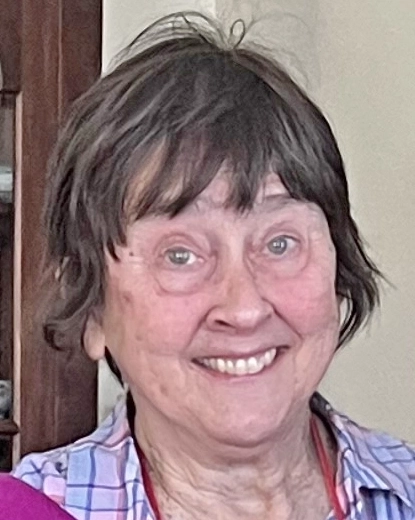
For 39 years, Lyles has worked at the museum, serving as its director for the past 29. During that time she has written grants, expanded exhibits, launched oral history projects, brought Smithsonian traveling exhibits to Fairfield County, and helped thousands of county residents and visitors uncover pieces of their own family histories.
But, perhaps, few have walked through the museum’s doors who have a deeper personal connection and devotion to the history of Fairfield County than the woman who has spent nearly three decades as its historian.
Her family story begins with her sixth great-grandfather, Ephraim Lyles, one of the earliest settlers to travel from Virginia through North Carolina into what would later become Fairfield County. The family settled along the Broad River at a crossing known as Lyles Ford.
“He was scalped in 1761, probably by the Cherokees,” Lyles said, describing the dangers faced by the county’s earliest settlers.
Despite Ephraim’s violent death, the family established deep roots in the area. One of his sons, born during the 1740s before Fairfield County officially existed, is believed to have been among the first European children born in the region.
Generation after generation, the Lyles family remained in Fairfield.
One descendant built Ivy Hall around 1790, while another constructed the large brick home on Blair Road in 1821 that later became the residence of artist Drew Blair. Lyles says both homes, though one has been altered in recent years, still stand as reminders of her family’s early presence in the county.
One Fairfield family story has been preserved through the 1937 Federal Writers’ Project slave narratives.
According to the account, Lyles’ great-great-grandfather was recovering from a broken hip when Union soldiers arrived during Sherman’s march through South Carolina. Ordered to reveal where his valuables were hidden, the grandfather reportedly replied, “Burn and be damned.”
The soldiers set fire beneath the grandfather’s bed. While the man escaped the fire, the floor boards were badly scorched before an enslaved servant extinguished the flames. For years, the charred floorboards remained preserved beneath a small trap door of a second floor installed during a later restoration of the home, according to Lyles.
Discovering Another Family Branch
Lyles’ work as a historian at the museum also led her to discoveries close to home.
In the late 1990s, Kenny Feaster walked into the museum researching his family history.
“He said, ‘According to my family we are related,’” Lyles recalled.
Research and later DNA testing confirmed the connection.
Their common ancestor was Belton Lyles, a young member of the Lyles family who, before leaving to serve in the Confederate Army, fathered two children with an enslaved woman named Rachel Foote.
Today, Lyles and her African American cousins attend one another’s reunions, funerals and family gatherings.
Lyles is working with relatives to better preserve Rachel Foote’s gravesite, located near the historic Coleman Cemetery in the Blair community, where she was buried by David Feaster beneath a marble monument.
Connected to the Museum
Lyles’ connection to the Fairfield County Museum extends to the building itself, the former Ladd boarding school, which dates to 1830.
The museum opened in 1976 during the nation’s Bicentennial celebration after community leaders restored it. Lyles’ father, a local builder, played an important role in that restoration.
Lyles joined the museum staff in 1987, initially working just three days each week, when the museum was then little more than a part-time operation.
With encouragement from then-County Councilman David Brown, county leaders eventually expanded the position into a full-time job. Lyles immediately began pursuing grants.
She secured funding that brought Smithsonian traveling exhibits to Winnsboro, including exhibits on traditional American music and historic barns. One exhibit inspired volunteers to dismantle, relocate and reconstruct an early log barn that still stands behind the museum today.
Lyles later obtained grants through the Institute of Museum and Library Services to launch an extensive oral history project documenting Fairfield County residents and their memories.
Under her leadership, the museum also completed conservation work and a custom display for one of its most significant archaeological treasures — a Native American cooking vessel discovered near the Wateree River that dates to approximately A.D. 1200.
For years, the Museum Holiday Open House has been a highlight of the holiday season in Winnsboro. Members of the town’s several garden clubs deck the halls, walls windows, and doorways with holiday greenery, and the large dining room table is filled with delicious homemade holiday edibles. In the parlor, holiday guests are entertained with beautiful music from classical stings quartets to Jim Graddick’s fiddling.
Helping Others Discover Their Stories
Lyles says the greatest reward has always been helping people discover their own history.
She recalls one retired textile worker who had not completed school and never learned to read. He knew little about his ancestry until learning he descended from the Hoffman family, early Fairfield County residents with ties to statesman John C. Calhoun. The discovery sparked a passion for history.
“It excited him so much that he started learning to read” Lyles said.
Experiences like that, she says, made every day worthwhile.
“So often, when I could help somebody understand something about their own history, I very often found new things that related to other areas that we didn’t know.”
Looking Ahead
Although retiring from the director’s position, Lyles says she has no plans to leave Fairfield County. She is ending her tenure much as she began it, working two or three days a week, and overseeing operations until a suitable director is found to replace her.
Lyles said she hopes to remain involved with the museum whenever she can.
“I hope to be here to shepherd it along,” she said. “It’s a community thing, and we need more community involved in preserving and promoting it.”
Trained as an artist with degrees from the University of South Carolina and a year studying art at the Academy of Art in Venice, Italy, Lyles plans to return to her artistic passion in retirement.
Her studio, housed in an old barn at her home, is being restored.
“I’m looking forward to having more time for painting, gardening and spending time with my two young grandchildren,” she said.
Looking back over nearly four decades at the museum, Lyles says preserving history has never really been about old buildings or artifacts. It has been about people.
And in Pelham Lyles’ case, those people include generations of her own family whose stories have become inseparable from the story of the Fairfield County Museum, itself.